 Try this styleon your selfie · free
Shaggy Wolf Cut for Fine Hair: Adding Volume Without Losing Length
Published October 6, 2026
The wolf cut's strategic layers can make fine hair look twice as thick without sacrificing the length you've grown out.
Why the Wolf Cut Works for Fine Hair
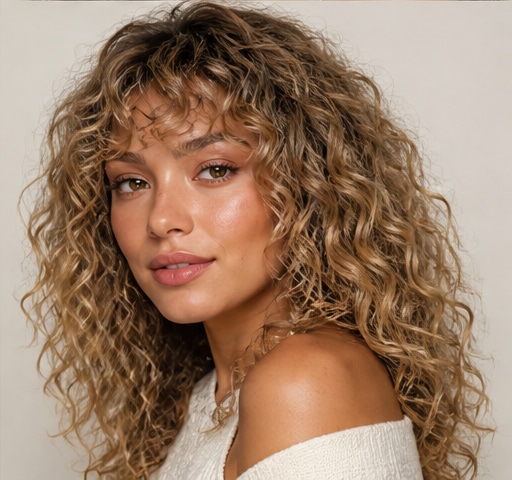
Fine hair lacks density per strand, so it tends to hang flat and look thinner toward the ends. A wolf cut, a hybrid of the '70s shag and a mullet, fixes that with shorter, choppy layers up top that pile volume around the crown, then longer pieces below to keep your overall length. The contrast is the whole trick: when the eye sees fullness at the top, the hair reads thicker everywhere. Unlike heavy one-length cuts that drag fine hair down, the wolf removes weight strategically so what's left can lift and move. The result is texture and bounce that fine hair almost never achieves on its own, while you keep the long lengths you may have spent a year growing.
Getting the Layering Right
This cut lives or dies by the layering, so be specific with your stylist. For fine hair, ask for stacked, shorter layers concentrated around the crown to build height, with the shortest pieces starting near the top of the head rather than deep underneath. Internal layers should be cut with restraint; over-thinning fine hair leaves wispy, see-through ends. Point-cutting (cutting into the ends at an angle) creates soft, textured tips that look fuller than blunt-then-thinned ends. Keep the very bottom length relatively intact so your hair doesn't taper to nothing. Bring reference photos that show volume on top with substantial length below, and clarify that you want layers for lift, not for removing bulk you don't have.
Drying and Styling for Maximum Lift
Volume is built when the hair is wet. Apply a root-lifting mousse or a light volumizing foam from roots to mid-lengths, then flip your head upside down and rough-dry until about 80 percent dry, scrunching as you go. Finish with a round brush at the crown, lifting sections straight up and directing heat at the roots, then hit them with a blast of cool air to set the lift. For piece-y texture on the ends, twist small sections with a flat iron or wrap them around a curling wand and break them apart with fingers. A light texturizing spray or dry shampoo at the roots, even on clean hair, adds grip and keeps the crown from collapsing by afternoon.
Who Should and Shouldn't Try It
The wolf cut flatters most face shapes because the face-framing layers and optional curtain or wispy bangs soften and balance features. It's especially good for anyone with fine hair who's frustrated by flatness but doesn't want to chop off length. That said, it's a styling commitment: this cut looks intentional when textured and a little flat when ignored, so if you genuinely never style your hair, a softer long layered cut may suit you better. People with very fine and very thin hair (low density and fine strands) should ask for conservative layering, because aggressive shag layers can expose the scalp. Wavy fine hair is the sweet spot, since natural bend amplifies the layers with minimal effort.
Products That Pull the Weight
Fine hair gets greasy and flat fast, so your product strategy should prioritize lift and grip over moisture-heavy formulas. Skip rich oils and heavy creams near the roots; they're the enemy of volume. Instead, lean on lightweight mousse for foundation, a texturizing or sea-salt spray for separation, and dry shampoo as a styling tool, not just a cleanser. Apply dry shampoo to the roots and crown, wait a minute, then massage it in to build invisible thickness. A flexible-hold finishing spray locks in the shape without crunch. The key is layering small amounts of several light products rather than one heavy one, so the hair stays mobile and the crown keeps its height through the day.
Maintaining the Shape Over Time
A wolf cut grows out more gracefully than a blunt cut because the layers simply lengthen into a soft shag, but the crown volume fades as those short pieces grow down. To keep the silhouette crisp, plan a trim every six to eight weeks, focusing on re-establishing the shorter crown layers and dusting the ends. Between cuts, the styling routine does the heavy lifting. If you want to test the look before committing, photograph a few angles of your current hair and try a virtual version on your own selfie with GlowMaxing to see how the layered shape suits your face. When you do book the cut, bring those references so you and your stylist start on the same page.
The quick checklist
- Concentrate shorter layers at the crown for lift, keep length below
- Ask for point-cut ends, not heavy thinning, to avoid wispy tips
- Rough-dry upside down with mousse, then round-brush the roots up
- Set volume with a cool-air blast after heat styling
- Use dry shampoo at the roots as a styling tool for grip
- Avoid heavy oils and creams near the scalp
- Trim every 6-8 weeks to restore crown layers
✦ Free to start✨ Try these looks on your own selfie with GlowMaxing →Upload one selfie and try any hairstyle, color or makeup look instantly with AI. Free to start.Download on theApp Store