 Try this styleon your selfie · free
The Best Lipstick Shades for Every Skin Tone
Published August 23, 2026
A complete guide to finding lipstick shades that make your complexion glow, organized by skin tone and undertone.
Skin Tone vs. Undertone: Both Matter
Finding your perfect lipstick comes down to two things working together: your skin's depth (fair, light, medium, tan, or deep) and your undertone (cool, warm, or neutral). Depth tells you roughly how light or saturated a shade should be to look balanced, while undertone tells you whether to lean toward blue-based or yellow-based colors. Get both right and a lipstick makes your whole face look brighter and more alive; get them wrong and even a beautiful shade can wash you out or look muddy. The good news is that once you know your undertone, you can confidently shop any depth. Cool undertones glow in blue-based shades like berry, plum, and true red, while warm undertones come alive in orange-based shades like coral, terracotta, and brick. Neutral undertones get to play in both worlds, which is the most flexible position to be in.
Fair Skin: Soft and Balanced
Fair skin pairs beautifully with soft, fresh shades that add color without overwhelming the face. For everyday wear, reach for soft pinks, rosy nudes, peachy beiges, and light corals that brighten the complexion gently. When you want impact, fair skin can absolutely carry a bolder lip; cool-toned fair skin looks striking in true blue-based reds and soft berries, while warm-toned fair skin glows in coral reds and warm roses. The thing to watch is going too dark or too brown, which can look heavy and aging against very light skin, or too pale and concealer-like, which can wash you out and make you look tired. If a nude leaves you looking drained, pick one with a touch more pink or peach than your natural lip color to add life back into the face.
Light to Medium Skin: The Versatile Range
Light and medium skin tones have the widest playground, able to wear a huge range of shades successfully. Gorgeous everyday options include mauves, rosy nudes, dusty pinks, soft berries, and warm caramel nudes that complement the natural warmth in the skin. For statement lips, cool-toned medium skin looks beautiful in raspberry, classic red, and plum, while warm-toned medium skin shines in brick red, terracotta, warm coral, and copper-nudes. This range can also pull off a true nude more easily than fair or deep skin, choosing one that's a shade or two deeper than the natural lip for definition. The main thing to avoid is anything with a gray or ashy base, which can look dull. When in doubt on medium skin, a 'my lips but better' rosy-mauve flatters almost universally and works for day or night.
Tan and Deep Skin: Rich and Saturated
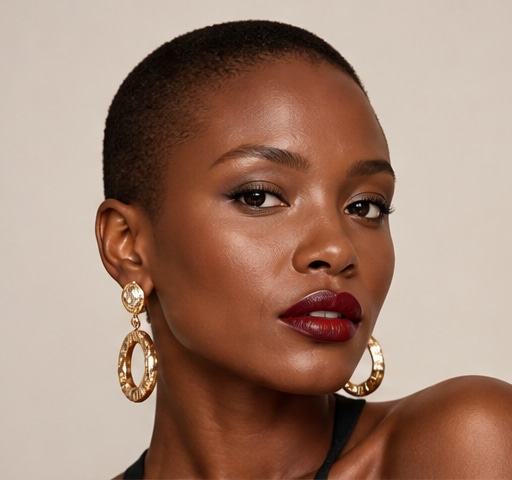
Tan and deep skin tones look absolutely stunning in rich, saturated, and bold shades that hold their own against the depth of the skin. Deep berries, plums, brick reds, dark cherry, brownish nudes, caramel, terracotta, and even deep brown-toned shades like a true 'chocolate' lip all look incredible. For nudes, skip anything pale or beige that can look ashy, and instead choose warm caramels, rich browns, and deep rosy-browns that complement rather than wash out. Cool-toned deep skin glows in blue-based reds, deep plums, and wine, while warm-toned deep skin radiates in orange-reds, copper, and golden-browns. Bold and bright shades like a vivid fuchsia or a true red read beautifully and rarely look 'too much' on deeper skin. The key is saturation: pigment-rich, opaque formulas show up best and let these gorgeous shades do their work.
Universal Shades and How to Adjust Them
A few shades are famously near-universal, flattering across most skin tones with small adjustments. A classic red works on everyone once you tune the undertone: cool skin wants a blue-based red, warm skin wants an orange-based red, and neutral skin can wear a true red right down the middle. A good berry and a well-chosen rosy nude are similarly adaptable. The trick to making a 'universal' shade work for you is matching its undertone to yours rather than assuming one exact bullet suits all. Depth matters too; the same red family should be lighter and brighter on fair skin and deeper and more saturated on deep skin. If a shade looks slightly off, it's almost always the undertone fighting yours, not the color being wrong for you outright.
How to Test and Lock In Your Shade
Always swatch lipstick on your actual lips, never just your hand, since lip pigment changes how a color reads, and check it in natural daylight rather than store lighting. Notice whether the shade brightens your face and makes your teeth look whiter (a good sign) or makes you look tired and sallow (the undertone is off). For longevity, line and fill the entire lip with a matching liner before applying, then blot and reapply for staying power. To skip the guesswork entirely, you can preview different lipstick shades against your own complexion on your selfie with GlowMaxing and instantly see which reds, berries, and nudes flatter your skin tone and undertone before you buy a single one. Build a small wardrobe of three shades, an everyday nude, a soft pink or mauve, and one bold statement, and you'll be ready for anything.
The quick checklist
- Match undertone first: cool wears blue-based shades, warm wears orange-based ones
- Fair skin: soft pinks, peachy nudes, and brightening corals for everyday
- Light to medium skin: mauves, rosy nudes, and berries flatter almost universally
- Tan and deep skin: rich, saturated berries, brick reds, and warm caramel nudes
- Avoid pale or ashy nudes on deep skin; choose warm caramels and browns instead
- Tune a classic red to your undertone: blue-based for cool, orange-based for warm
- Swatch on your lips in daylight and pick shades that brighten your face and teeth
✦ Free to start✨ Try these looks on your own selfie with GlowMaxing →Upload one selfie and try any hairstyle, color or makeup look instantly with AI. Free to start.Download on theApp Store